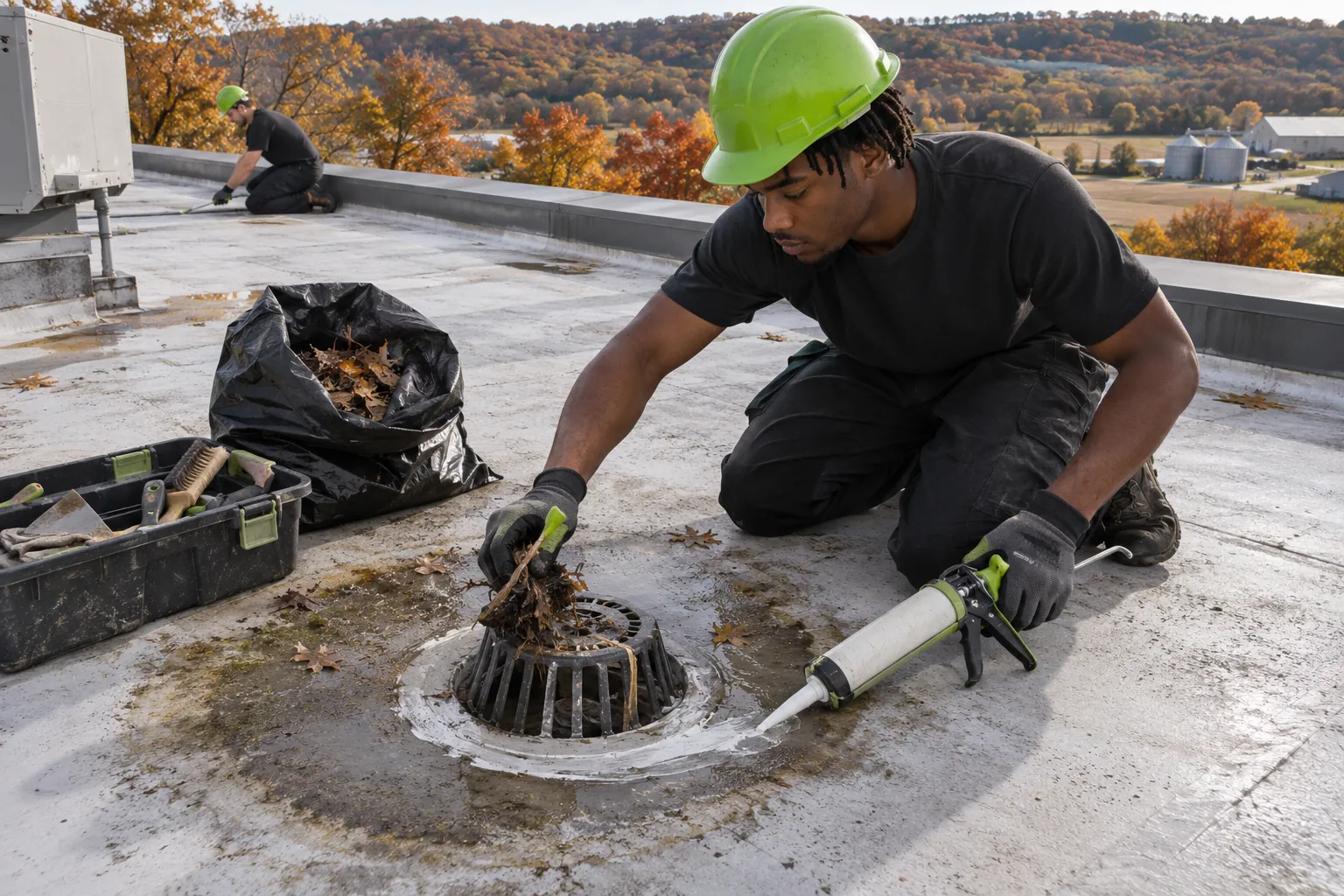
Flat Roof Repair
Office and dock-area flat roofs with split seams or drains that hold water.
See flat roof repair
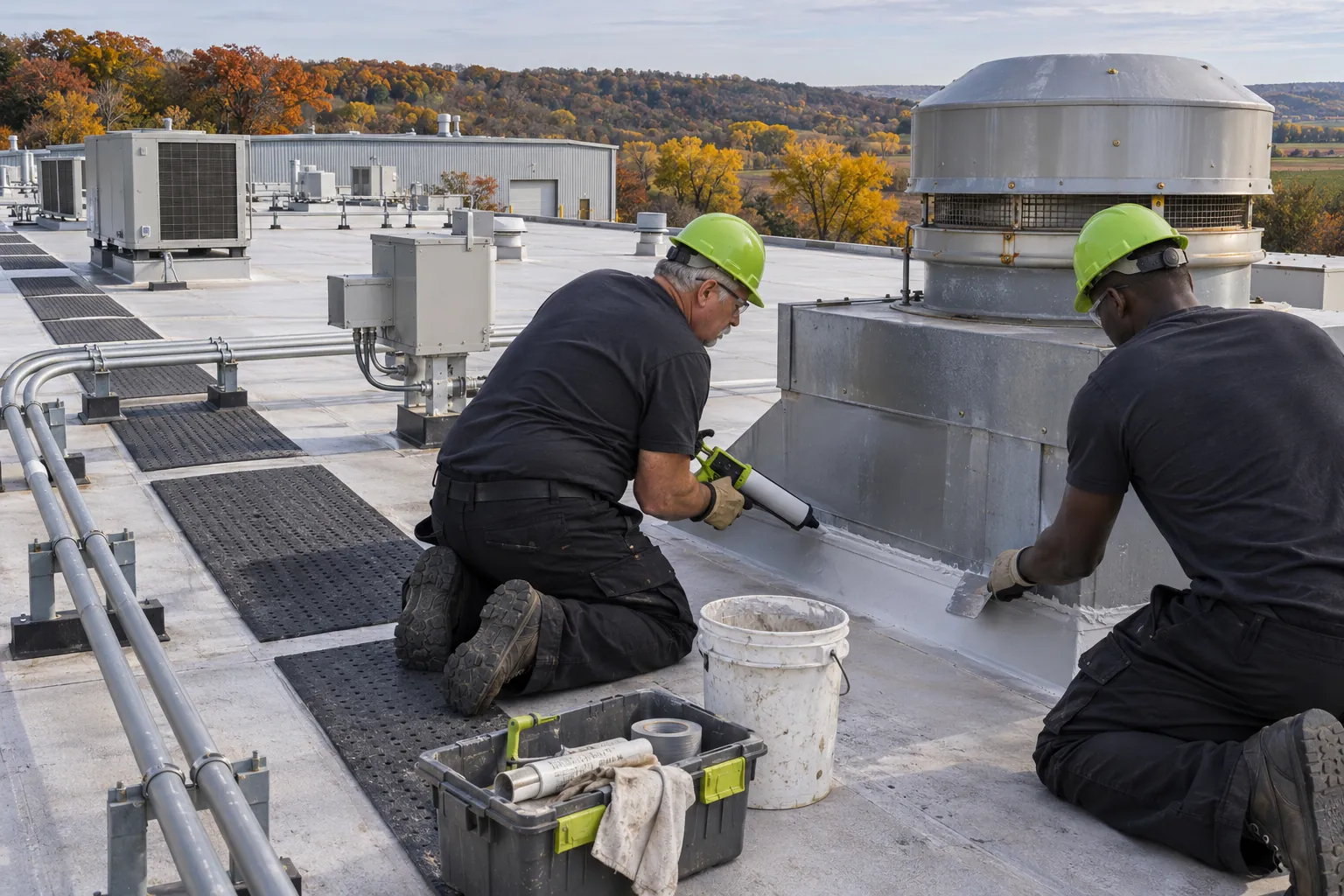
As a Bellevue industrial roof repair contractor, we fix membrane and flashing around fans, stacks, and rooftop equipment on plants and warehouses, scheduled around your shifts.
Bellevue industrial roof repair fits big roofs when damage clusters around equipment and traffic paths. The table shows where replacement enters the picture.
| Factor | Repair Fits | Plan For Replacement |
|---|---|---|
| Damage area | Around fans, curbs, and paths | Spread across the whole field |
| Membrane near exhaust | Softened in small zones | Softened across large sections |
| Deck | Solid steel deck | Rusted or holed deck |
| Drains | Some blocked or damaged | Drain lines collapsed under the roof |
| Leak history | Leaks tied to recent work | Years of leaks over the same lines |
Industrial roofs get worn by equipment, trades, and process exhaust as much as by weather.
Water landing on equipment or product often follows a leak near a stack or fan curb above the line.
Grease and process exhaust break down membrane around fans. We cut out softened areas and install materials rated for heat and residue.
New drips after an HVAC or electrical job often trace to punctures, dropped tools, or flashing pulled loose during the work.
Routes to equipment collect cuts and scuffs. We patch punctures and lay walk pads along the paths trades use.
Icicles and ice ridges at the roof edge mean meltwater is refreezing at cold gutters and drains.
Heat from processes melts snow unevenly, and meltwater backs under flashing. We repair the flashing and clear drains so water can leave.
These repairs target the parts of an industrial roof that wear fastest.
Each leak gets traced, damaged roofing comes out, and matching membrane, flashing, or panels go in. Leaks over lines are set for shift changes.
Heat- and residue-resistant membrane and flashing go in around fans and stacks, where standard sheets soften first.
Pads along routes to rooftop units spread foot traffic and keep tools off the membrane.
Scheduled visits clear drains, renew sealant at penetrations, and fasten loose flashing so small problems get caught early.
Big roofs over working floors need repairs that fit the operation.
Sealed flashing around stacks and curbs keeps water off lines, panels, and stock.
Walk pads and an access log cut down on punctures from HVAC and electrical work on the roof.
Cleared drains and repaired edges reduce ice dams at gutters and scuppers.
Inspection notes list each issue by roof section and photo, so maintenance staff know exactly where to look.
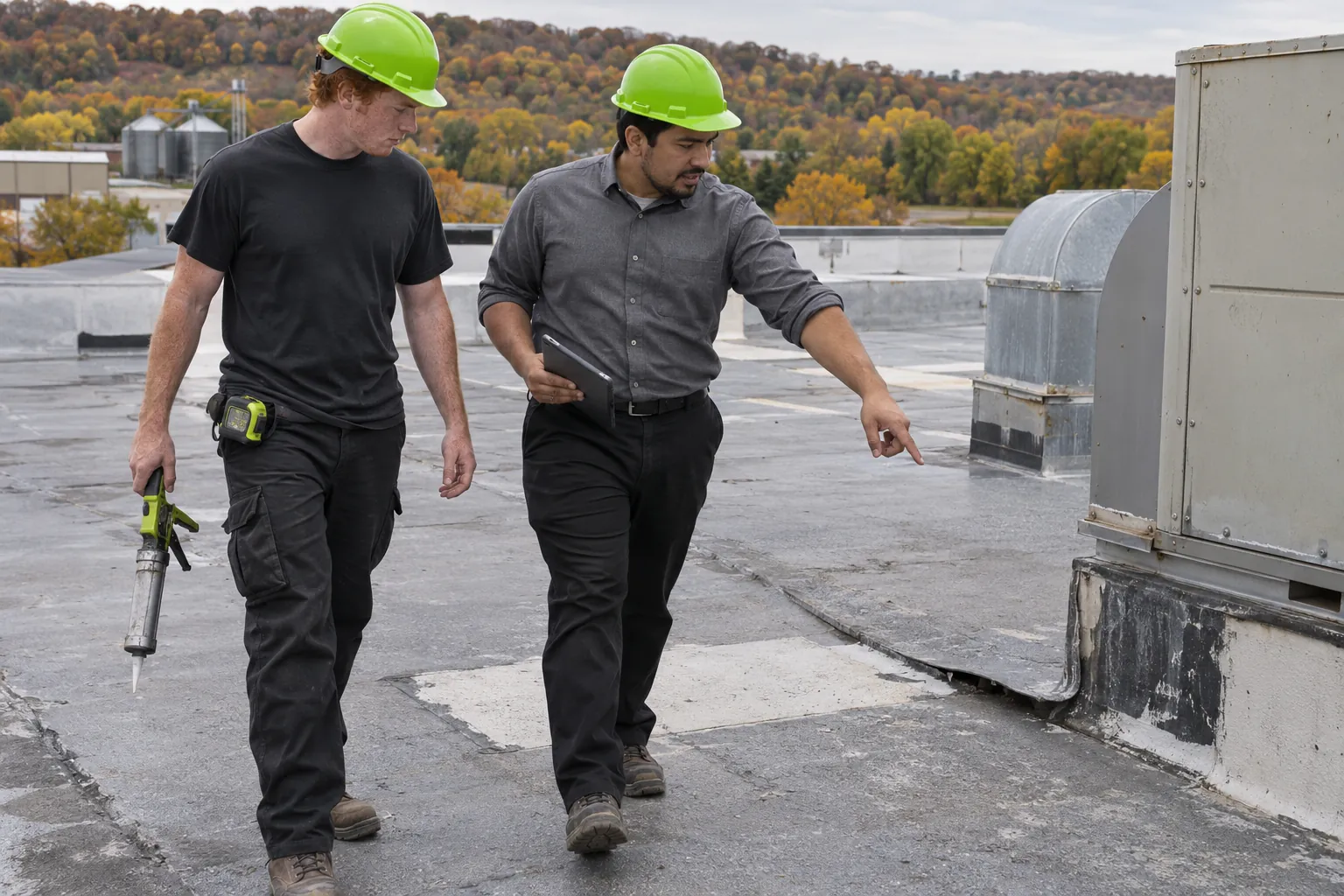
Water over equipment needs a temporary seal first. Request an estimate and tell us which line or bay sits below the drip.
Four decisions, set around how your plant runs.
History comes first: past leaks, earlier repairs, and who has been on the roof. Then each section, curb, and process penetration gets walked and read for moisture.
Damage clustered around equipment means targeted repair. Wet insulation or deck rust across a whole section means pricing replacement for that section.
Areas near exhaust get heat- and residue-resistant materials, while the open field gets membrane matched to what is already there.
Work zones sit away from forklifts and loading docks, and roof repairs over running lines are set for shift changes or planned downtime.
Industrial roofs often mix systems, and each needs its own repair.
Office and dock-area flat roofs with split seams or drains that hold water.
See flat roof repair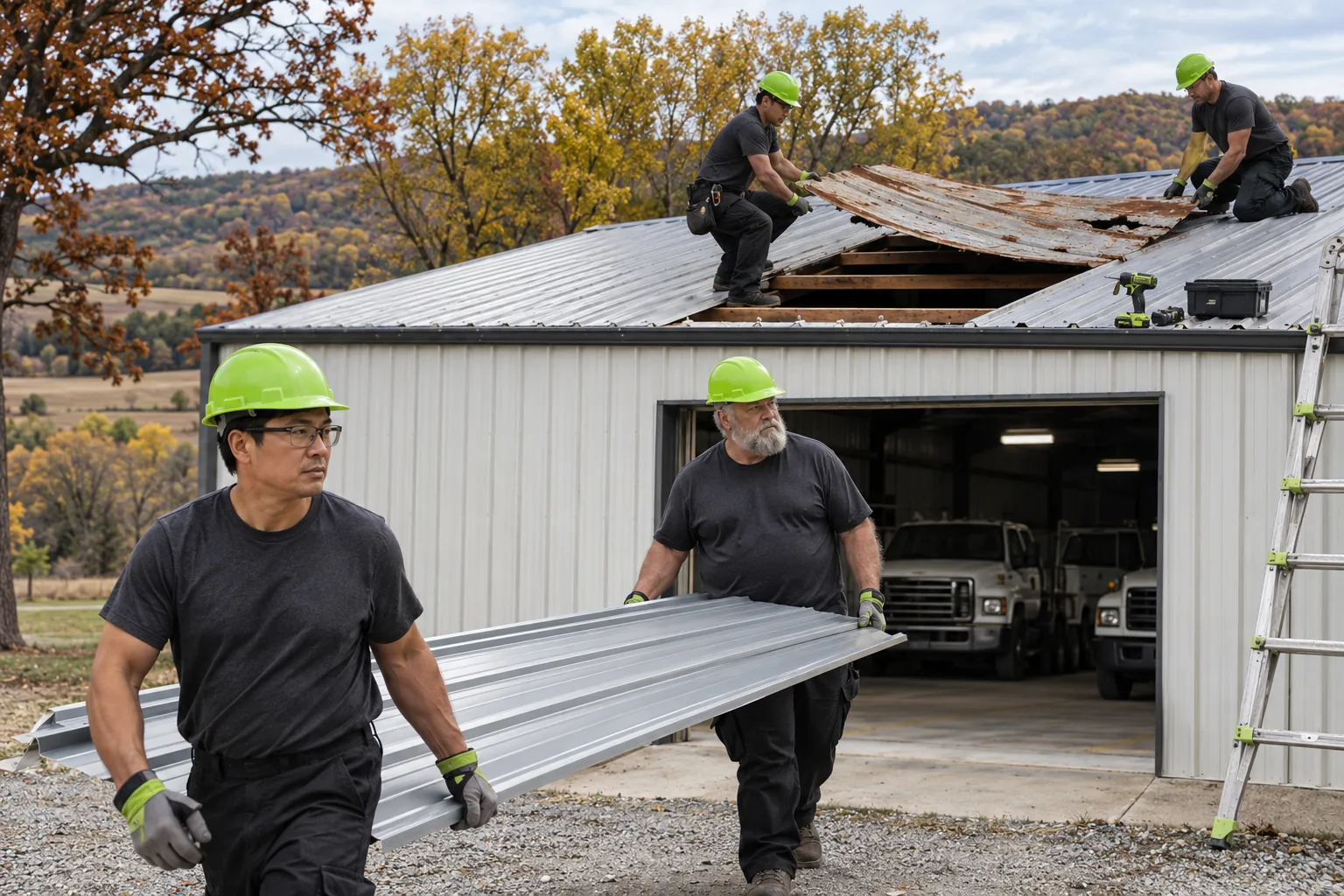
Metal warehouse wings and canopies with loose screws, open laps, or rust at the eaves.
See commercial metal roof repair
Single drips with no clear source get traced from inside the plant to the roof.
See commercial roof leak repairWhat plant and warehouse managers ask before scheduling repairs.
Maintenance is a schedule of small tasks that keeps large leaks from starting: clearing drains, renewing sealant at penetrations, fastening loose flashing, and adding walk pads along routes to equipment. An access log tracks which trades went up and what they worked on.
It starts with the roof's history, past leaks, and records of earlier repairs. On the roof, each section gets walked and equipment curbs and process penetrations get checked. Moisture readings or core samples show wet insulation, and the result is a list of problem areas by location, with photos.
Tracing each leak comes first, then damaged roofing is removed and matching membrane, flashing, or panels go in. Repairs near process exhaust use heat- and residue-resistant materials, work zones stay clear of forklifts and docks, and leaks over production lines are scheduled for shift changes.
Ice dams form when snow melts over warm areas and refreezes at cold edges, gutters, and drains. The ice holds back meltwater, which pushes under flashing and laps. Roofs over heat-producing processes melt snow unevenly, so clear drains, repaired flashing, and heated drain lines matter more there.
Bellevue's building permit page says no building in its jurisdiction, the city plus a two-mile area around it, can be altered or repaired without a permit, and roofing is missing from its exempt list. Ask the Permits and Inspections Division about your repair before work starts, or we can check for you.
Most roof repairs do. Work zones are fenced off from forklifts and docks, welding and torch work stays clear of air intakes, and any repair over a running line waits for a shift change or planned downtime.
Walk pads along routes to rooftop units take the foot traffic, and an access log records who went up and why. After any trade visit, a quick walk of their route catches punctures and loose flashing before rain finds them.
Tell us what runs below the leak and when the line can pause. We plan the repair around your schedule.