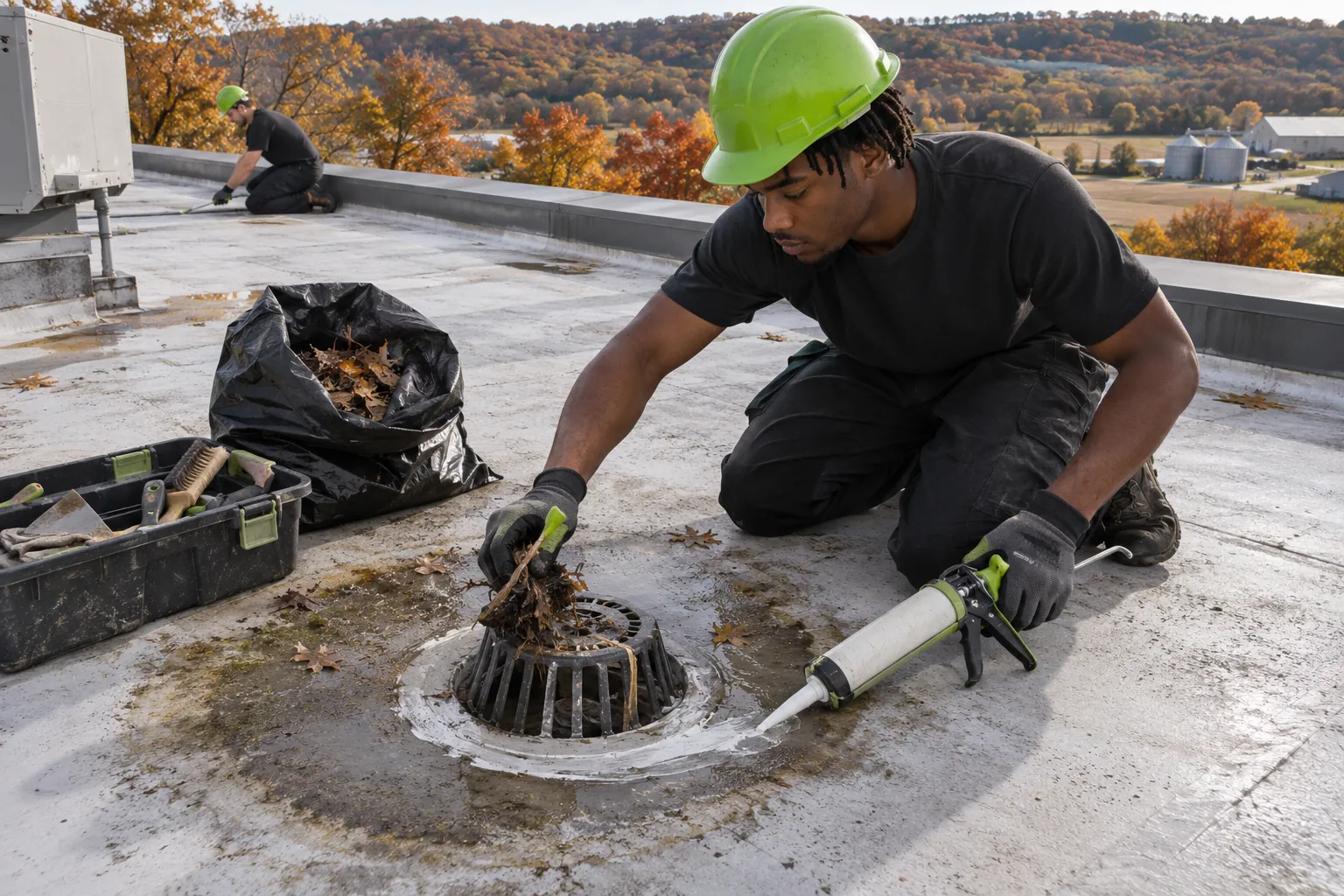
Flat Roof Repair
Low-slope office sections attached to the shop with split seams or a drain that holds water.
See flat roof repair
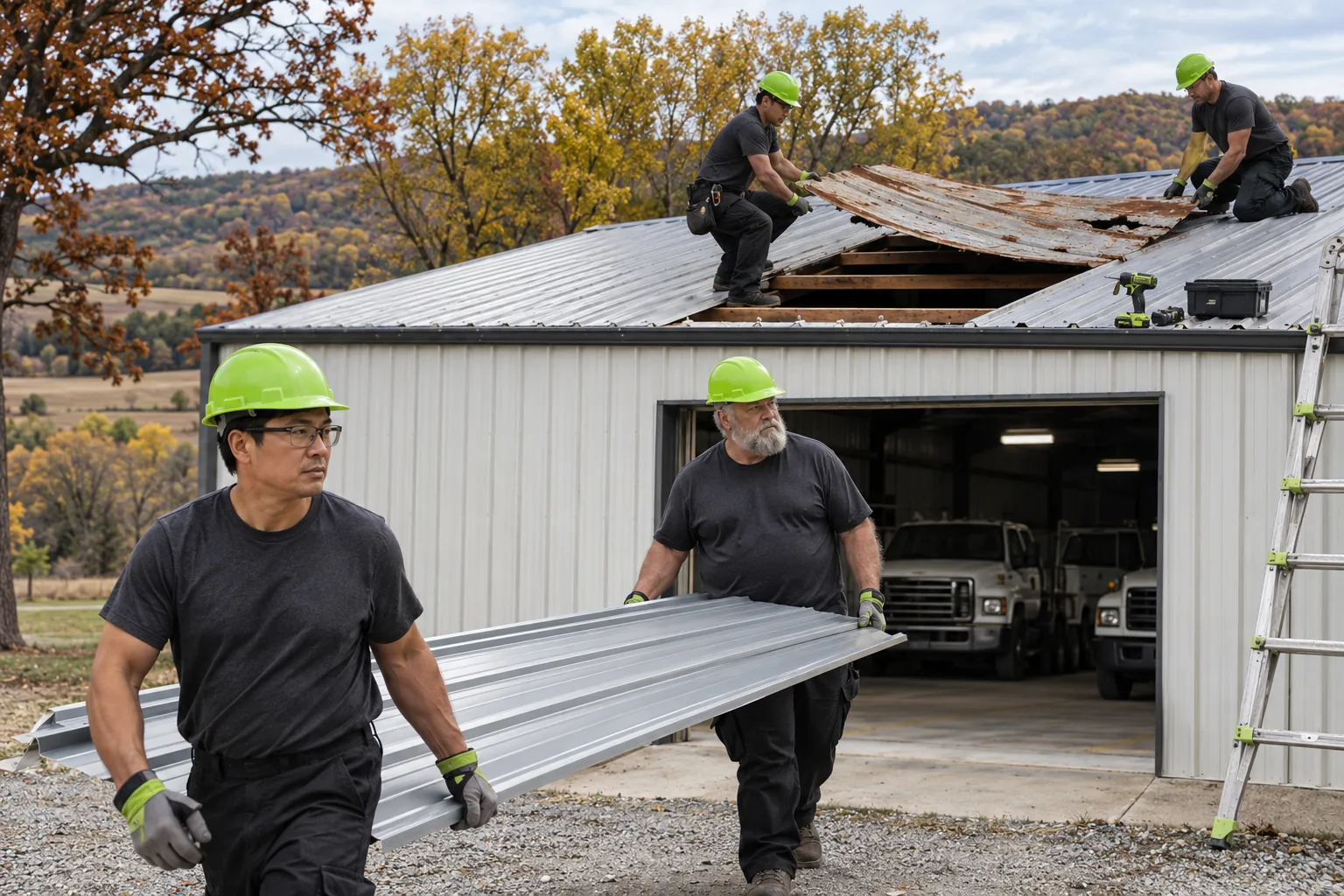
As a Bellevue commercial metal roof repair contractor, we replace failed screws, reseal laps, and swap rusted panels on shops, garages, and warehouses.
Bellevue commercial metal roof repair fits most panel roofs until rust thins the steel. These are the checks that decide it.
| Factor | Repair Fits | Plan For Replacement |
|---|---|---|
| Panels | Rust on a few panels | Thinned or holed steel across the roof |
| Fasteners | Loose screws or worn washers | Stripped holes along most purlins |
| Laps | Dried sealant at some laps | Laps separating along whole runs |
| Purlins | Straight and solid | Bent or rusted framing |
| Trim | Loose ridge or eave pieces | Trim missing along long runs |
Metal roofs show trouble inside first, often far from where the water gets in.
Water running along steel framing before it drops usually starts at a screw row uphill from the drip.
Panels move with heat and cold until washers split and screws back out. We replace them with oversized screws and new washers.
Orange patches on panel undersides show where water sits at an end lap or a hole.
Water collects at the low end of each run. Rusted-through panels come out and new ones of the same profile slide in, lapped with the flow.
Drips that show up on cold, dry mornings often mean condensation, which needs a different fix than a leak.
Pipe boots and fan curbs on garage roofs crack in the sun. New boots and flashing seal the panel around each opening.
Each repair works on one part of the panel system and uses parts that match it.
Old sealant comes out of the lap, stitch screws pull the panels tight, and fresh butyl tape or sealant closes it. Repeat leaks get a reinforced mastic strip.
Fasteners come out, the rusted panel slides free, and a new panel of the same profile and gauge goes in with new sealant at the side laps.
Backed-out and stripped screws get swapped for oversized fasteners with new washers, row by row, into solid purlins.
Ridge caps, eave trim, and wall flashing get refastened or replaced so wind stops lifting the edges.
Metal panel roofs cover many of the shops and garages we repair around Bellevue.
Sealed screw rows and laps keep water off vehicles, tools, and stored parts. Floors stay dry under the work bays.
Fresh fasteners in solid purlins hold panels down when wind gusts hit the roof edge.
Replacing a few rusted panels now keeps rust from spreading across the laps beside them. New panels match the old profile.
Panel repairs happen on the roof, so services, shifts, and deliveries carry on underneath. Interior covers go down only below panels being replaced.
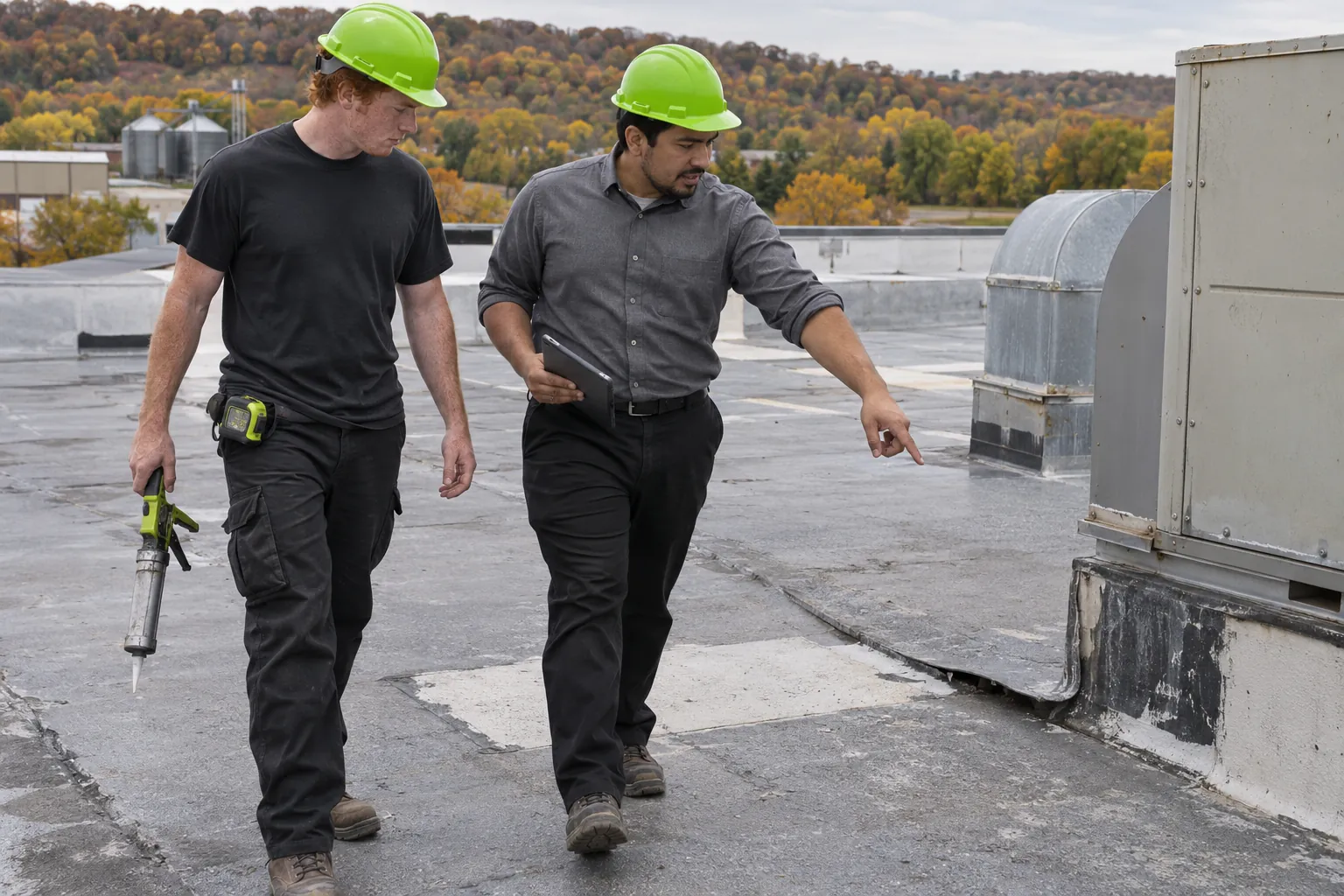
Loose fasteners show up as drips along purlin lines. Ask for an estimate and note which bays drip in rain.
Four decisions guide each metal roof we repair.
Screw rows, side laps, end laps, trim, and every pipe boot get checked, and we compare drips inside with rain and temperature.
Rust on a few panels and loose screws point to repair. Thinned steel across the roof or rusted purlins point to replacing that section.
Matching the panel profile, gauge, and color keeps new pieces lapped correctly with the old ones and shedding water the same way.
Noisy panel removal goes on quieter weekdays, lifts stay clear of doors and parking, and interior covers go down only where a panel comes out.
Metal buildings often connect to flat roofs or sit next to equipment that needs its own repair.
Low-slope office sections attached to the shop with split seams or a drain that holds water.
See flat roof repair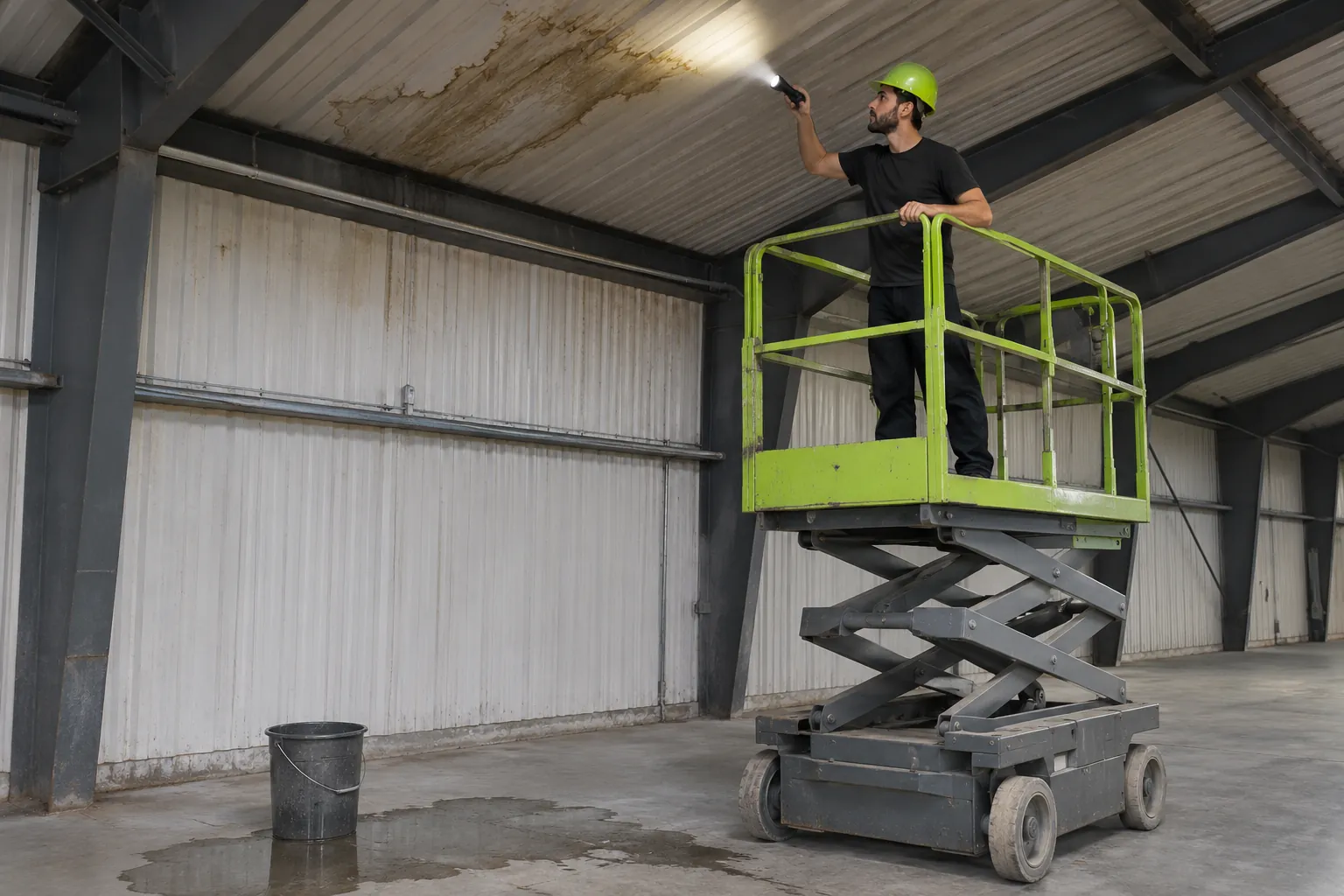
Drips that move around the building get traced to the panel or boot letting water in.
See commercial roof leak repair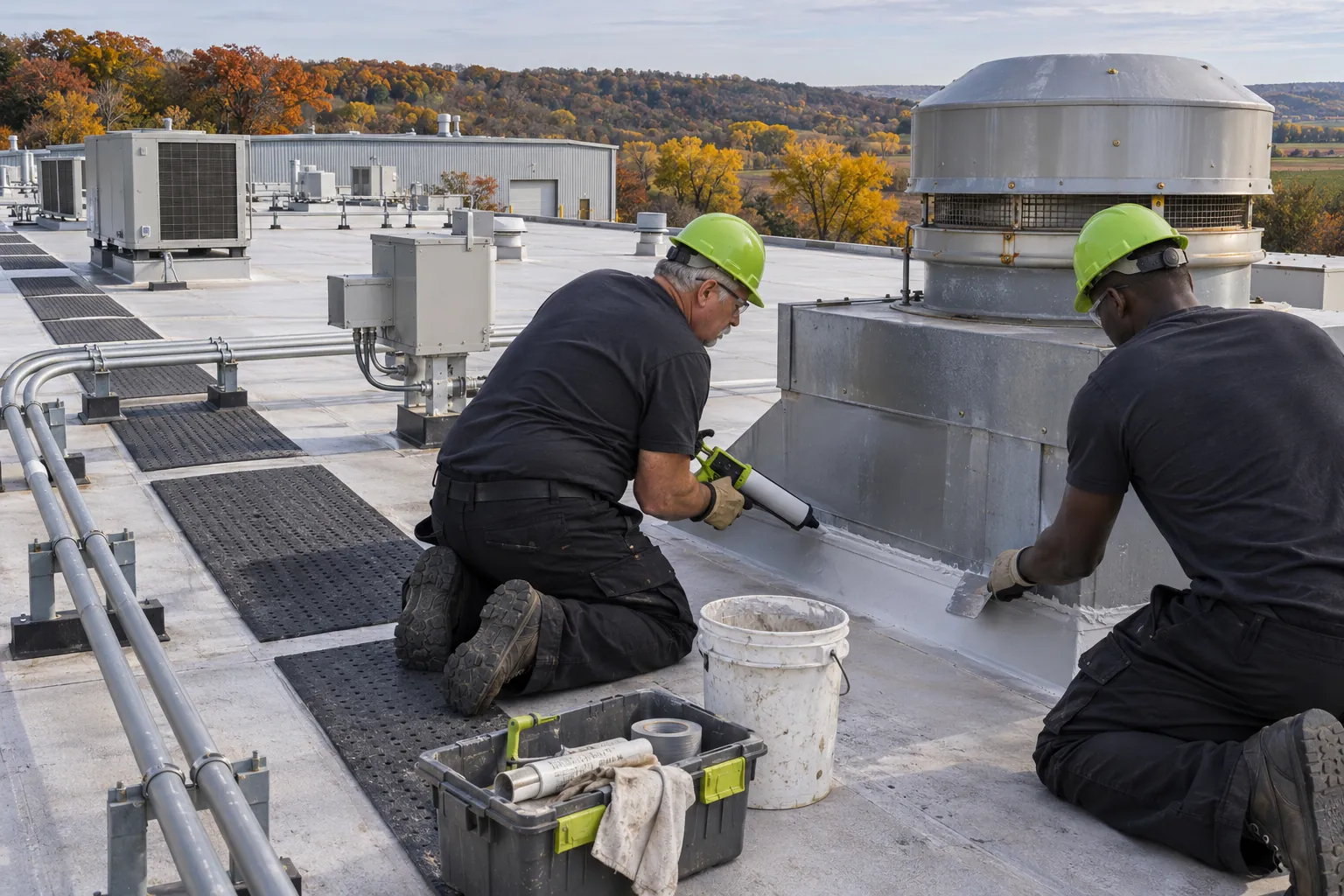
Shop roofs carrying exhaust fans and heaters get repairs that stand up to heat.
See industrial roof repairAnswers to what owners of metal buildings ask us.
The fasteners come out and the damaged panel slides free. A new panel of the same profile and gauge goes in, side laps get fresh sealant, and end laps overlap in the direction water flows. New washered screws fix it to solid purlins.
Cleaning the lap and removing old sealant comes first. Stitch screws pull the panels tight, then butyl tape or sealant goes into or over the lap. Seams with repeat leaks get a fabric-reinforced mastic strip, and long panel runs get extra attention at end laps.
Failed fasteners top the list, as on other metal buildings. Garage roofs also carry exhaust fans and vents that pierce the panels, and warm, humid air inside condenses under cold steel. Checking whether drips follow rain or temperature separates a leak from condensation.
Fastener, seam, and flashing work happens from above, so services carry on. Panel removal and other noisy work go on weekdays without services, lifts and materials stay away from entrances and parking, and interior protection goes down only under a panel being replaced.
Cost follows what is failing. Fastener replacement scales with roof area and screw count, panel replacement with profile, gauge, and whether matching panels are in stock, and ridge, eave, and wall flashing with linear feet. Lifts, roof height, and work over occupied space add to it.
Drips that line up with rain point to a leak at a screw, lap, or boot. Drips on cold, dry mornings point to condensation, as warm inside air meets cold steel. Ventilation or insulation fixes condensation, so we sort out which one it is before pricing a repair.
Tell us which bays drip and what the building is used for. We check every screw row and price the repair from there.