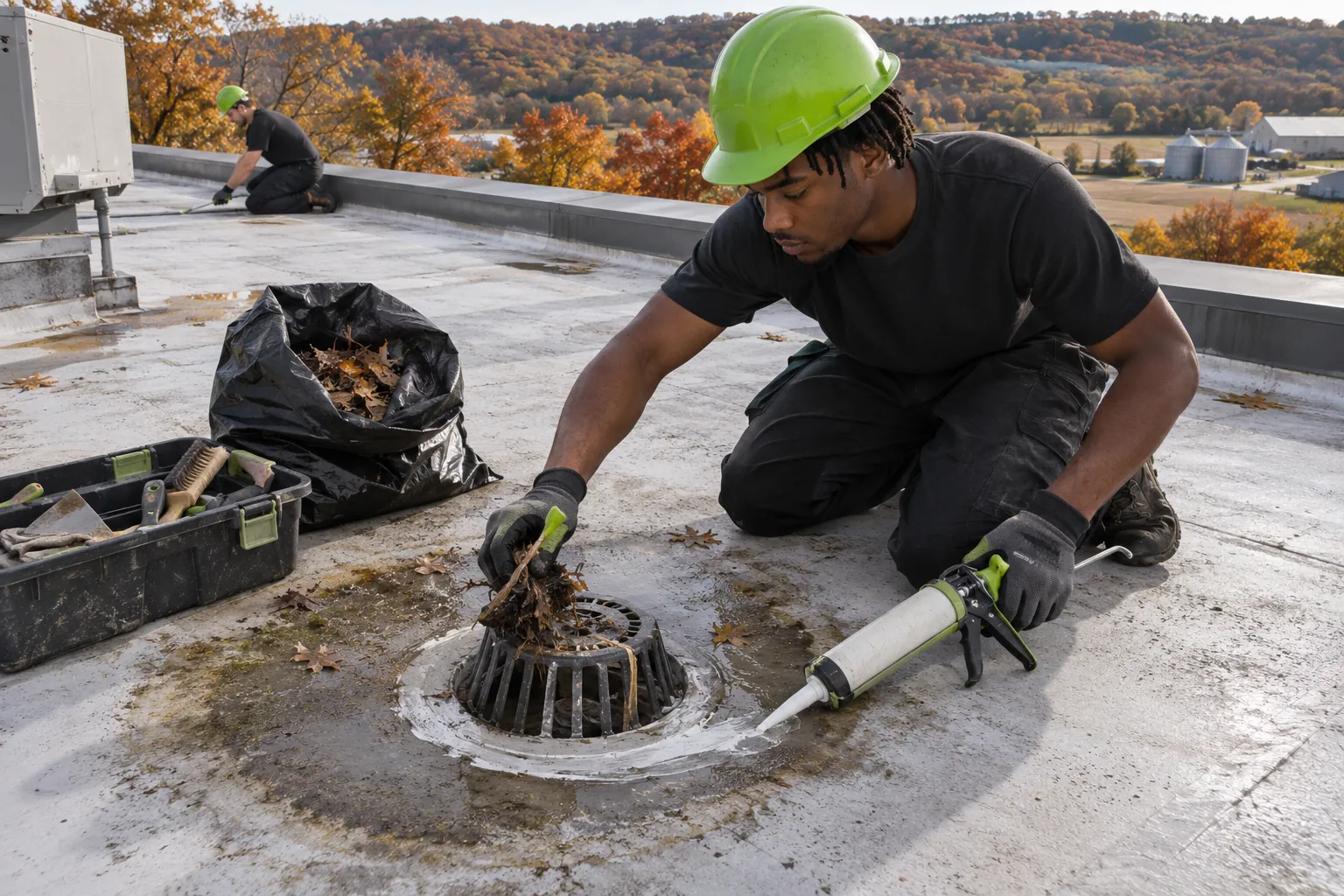
Flat Roof Repair
Seam welds, drain resets, and wet insulation cut-outs on TPO, EPDM, and built-up roofs.
See flat roof repair
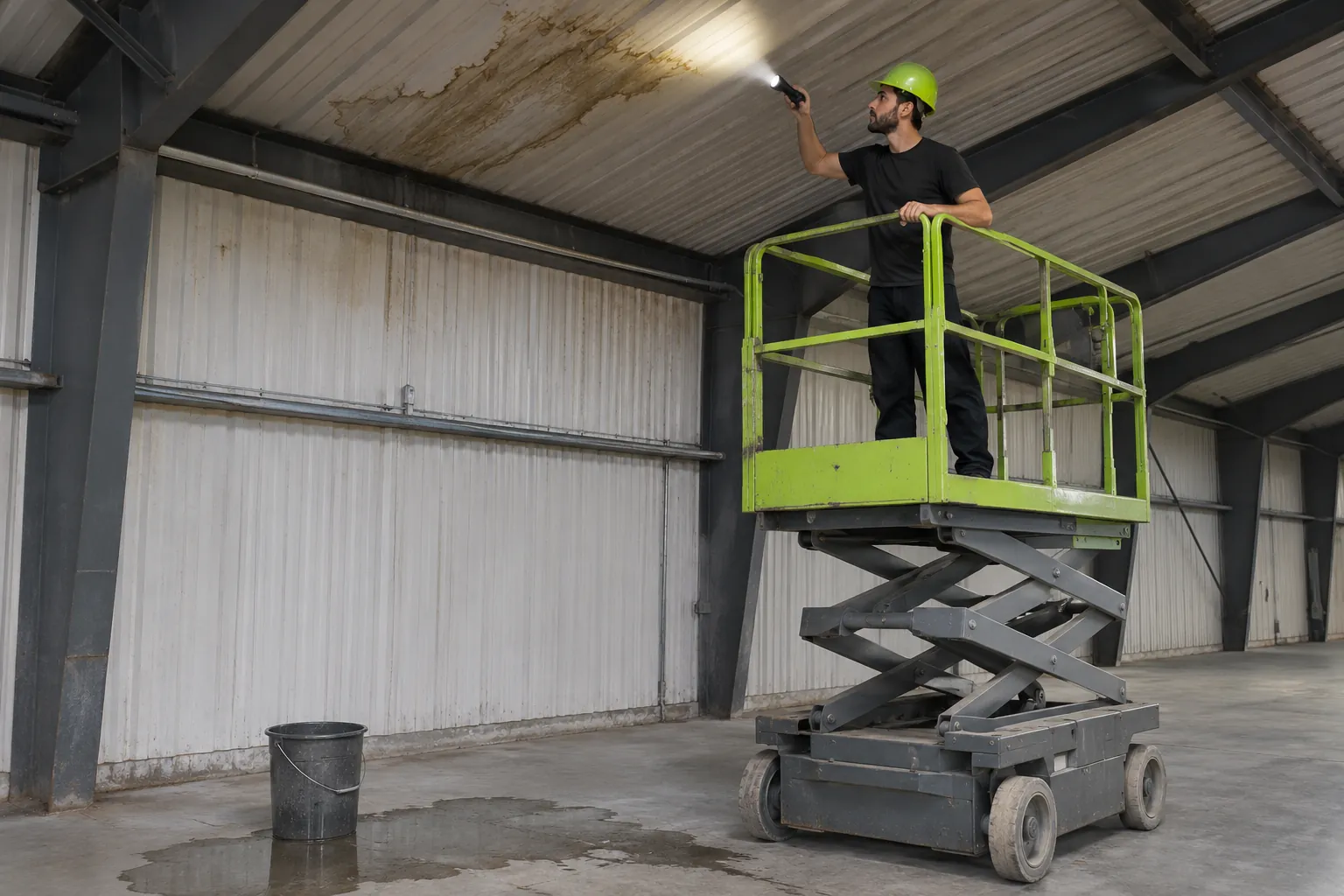
As a Bellevue commercial roof leak repair contractor, we trace each drip from the ceiling to the seam, curb, or flashing letting water in, then fix that spot.
Bellevue commercial roof leak repair works when the water has one or two entry points. The table shows when a leak points to something bigger.
| Factor | Spot Repair Fits | Plan For a Larger Repair |
|---|---|---|
| Entry points | One or two traced | Dozens across the roof |
| Insulation | Wet only near the leak | Wet across whole bays |
| Timing | Leaks with rain | Drips on cold, dry mornings |
| Deck | Solid under the wet area | Rusted or soft decking |
| History | First leak in this spot | Same spot leaking after past patches |
The stain inside rarely sits right under the opening, so we pair each sign with where it usually starts.
Rings that spread after each storm mean water is traveling along the deck before it drops through.
Water runs downslope on the deck, so the opening often sits several feet uphill. We test seams in that area first.
Ceiling drips near a supply grille or a unit's footprint point to the curb above or the ducts and lines passing through it.
Units that were moved or swapped often leave damaged flashing. We reflash the curb up to the rail and seal each line with a boot or pitch pan.
Fresh drips after a hailstorm mean bruised membrane or a cracked skylight that looked fine from the ground.
Hail bruises membrane, dents vents, and cracks skylight domes. Each strike gets marked and photographed, then repaired before the next storm.
When water is coming in now, every leak gets two repairs in sequence.
Roof cement, tape, or a tarp stops water fast, even on a wet roof. It holds until the surface dries for the permanent fix.
Materials matched to the roof system go on a clean, dry surface and tie into the surrounding membrane or panels.
New base flashing, boots, and pitch pans seal the places where ducts, pipes, and lines pass through the roof.
Controlled water on one area at a time confirms the entry point before the repair and checks the fix after it.
Leaks hit hardest over rooms full of people, so these buildings get fast attention.
Closing the entry point keeps water off gym floors, pews, and classroom ceilings when the next downpour hits.
Water near light fixtures and panels is a safety issue, and sealing the roof above removes the source.
Ceiling tile and insulation that stay dry never get the chance to grow mold.
Photos and locations for every repair help pin down any future leak faster.
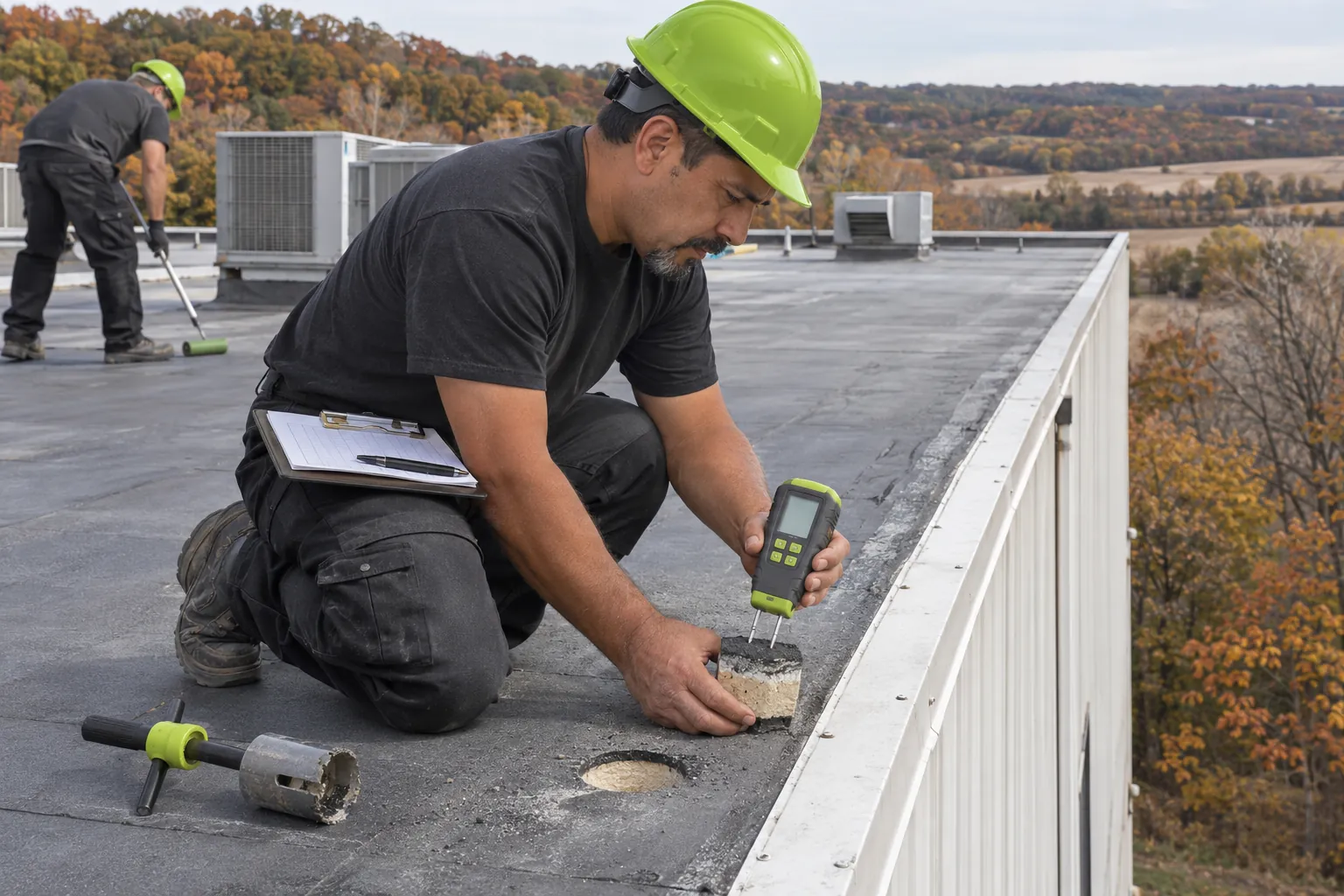
A stain that returns means the first repair missed the source. Request an estimate and tell us when it started dripping again.
Leak work follows four decisions in this order.
Starting under the stain, we map the roof area above it and check laps, curb flashing, and drains by hand before any testing.
One traced opening over dry insulation is a spot repair. Wet insulation spreading across bays, or a soft deck, means a larger section comes out.
Temporary seals go on first if water is coming in. The permanent repair uses membrane, flashing, or panels that match the roof system.
Interior protection goes down only where needed, and after-hours work is set for leaks over offices, classrooms, or stock that stays in place.
Once the source is found, the fix often falls under one of these services.
Seam welds, drain resets, and wet insulation cut-outs on TPO, EPDM, and built-up roofs.
See flat roof repair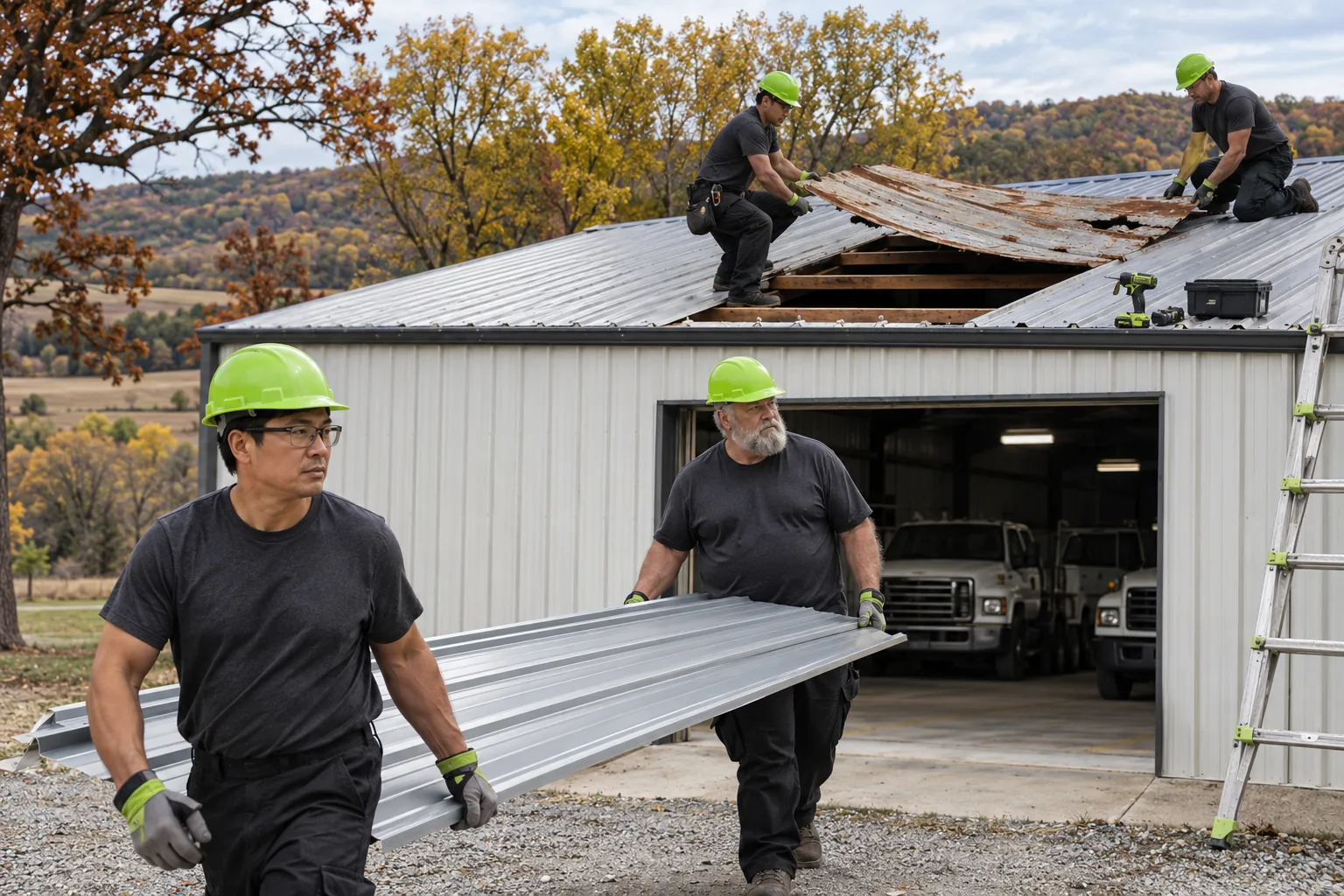
New screws, resealed laps, and matched panels when the leak traces to a metal roof.
See commercial metal roof repair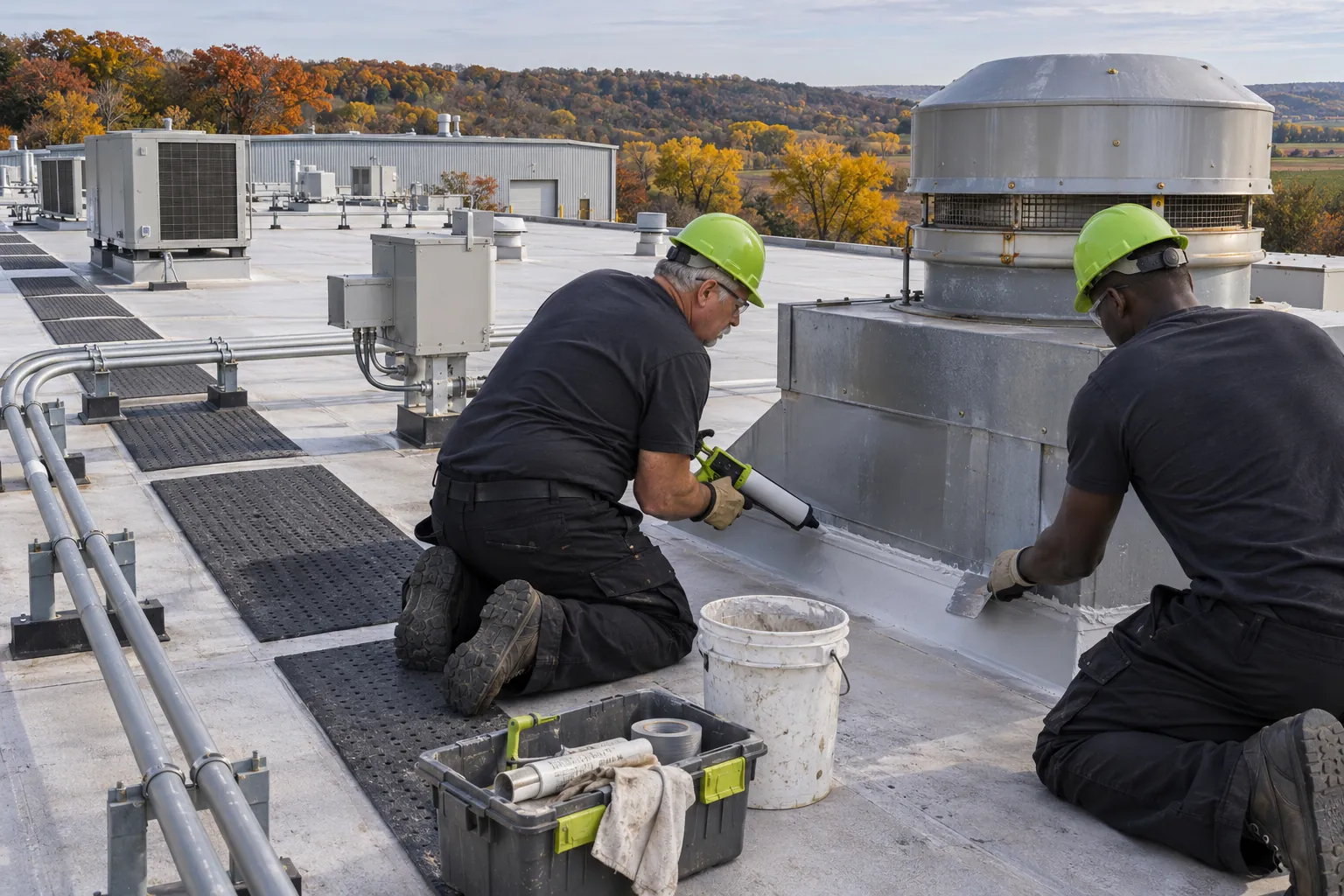
Repairs near exhaust fans and process stacks where heat and residue break down the membrane.
See industrial roof repairWhat owners ask once water shows up inside.
Temporary repairs stop water fast with roof cement, tape, or a tarp, and they can go on a wet roof. Permanent repairs use materials matched to the roof system, applied to a clean, dry surface and tied into the membrane or panels around them. Plan to replace temporary work before it fails.
Cracked curb flashing and open seams beside the curb cause most of them, along with gaps where ducts and lines pass through. Units that were moved or swapped often leave damaged flashing behind. Reflashing the curb up to the rail and booting each line seals it.
Check for torn membrane, cracked skylights, dented vents, split seams, and new stains inside. Bruised membrane can look intact from a distance, so a close roof walk matters. Each strike gets marked and photographed, and damage is repaired before the next storm.
A school, church, or office roof should stay dry in a downpour. Heavy-rain leaks mean drains or gutters can't keep up, or water is rising above a weak seam or flashing. Big roof areas over gyms and sanctuaries gather water fast, so these leaks need quick repair.
Cost depends most on how long the source takes to find and how far water spread. One open seam is a short repair. Several entry points, saturated insulation, or deck damage widen the work, and interior protection, after-hours timing, and testing add to some jobs.
Catching water inside and moving stock is the useful part. Climbing onto a wet roof to patch it puts people at risk, so leave the roof to the crew and tell us where the water lands. A temporary seal goes on from above at the first visit.
Tell us where the water lands and when it started. We trace it to the roof and fix the spot that lets it in.