
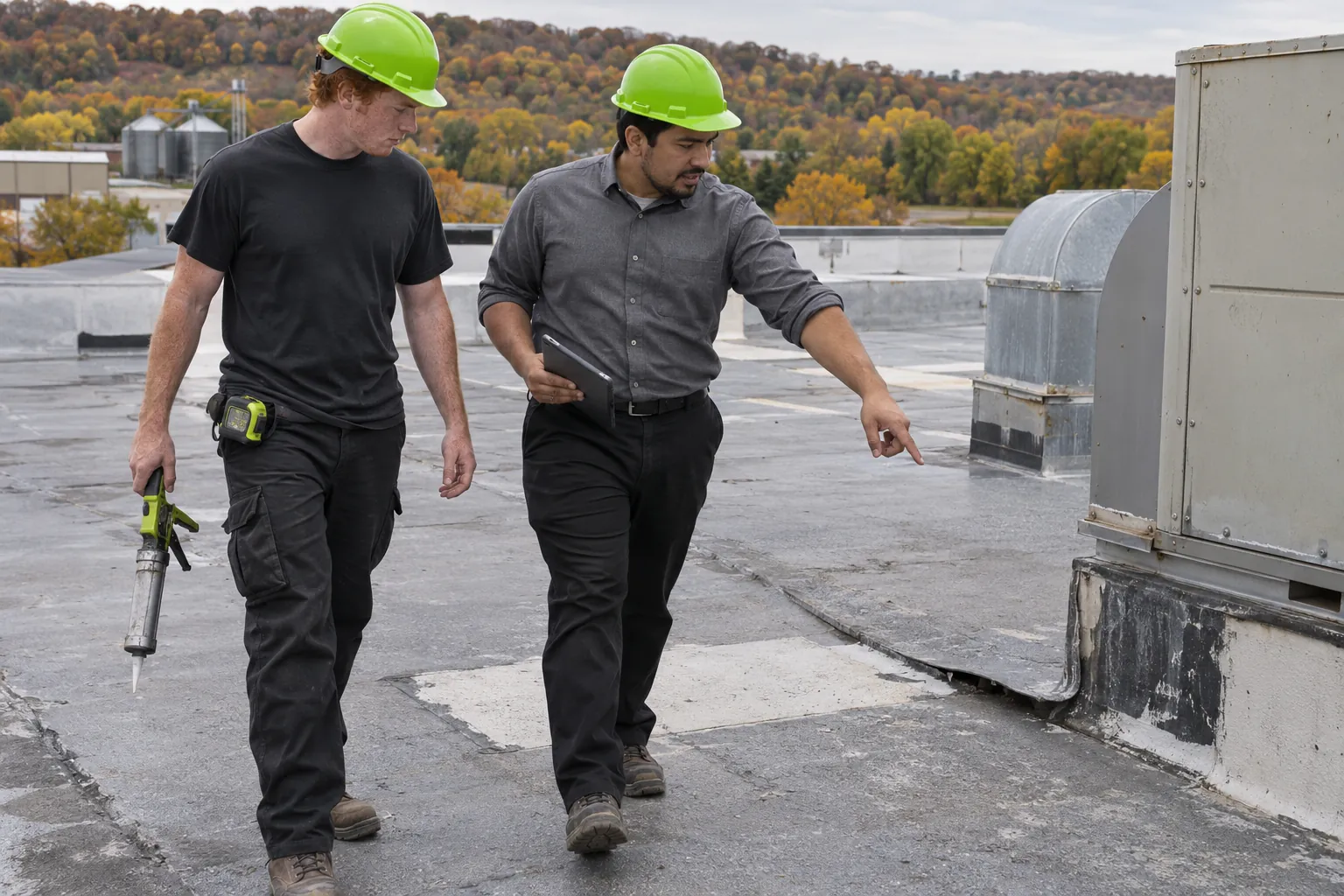
About Our Bellevue Commercial Roof Repair Work
Roof Repair Built Around Finding the Source of Each Leak
Learn about our Bellevue commercial roof repair work: how we inspect, what we fix, and where we draw the line between repair and replacement.
About Our Bellevue Commercial Roof Repair Work, Start to Finish
Questions about our Bellevue commercial roof repair work usually start with one thing: who finds the leak. We do, on the roof, before any price.
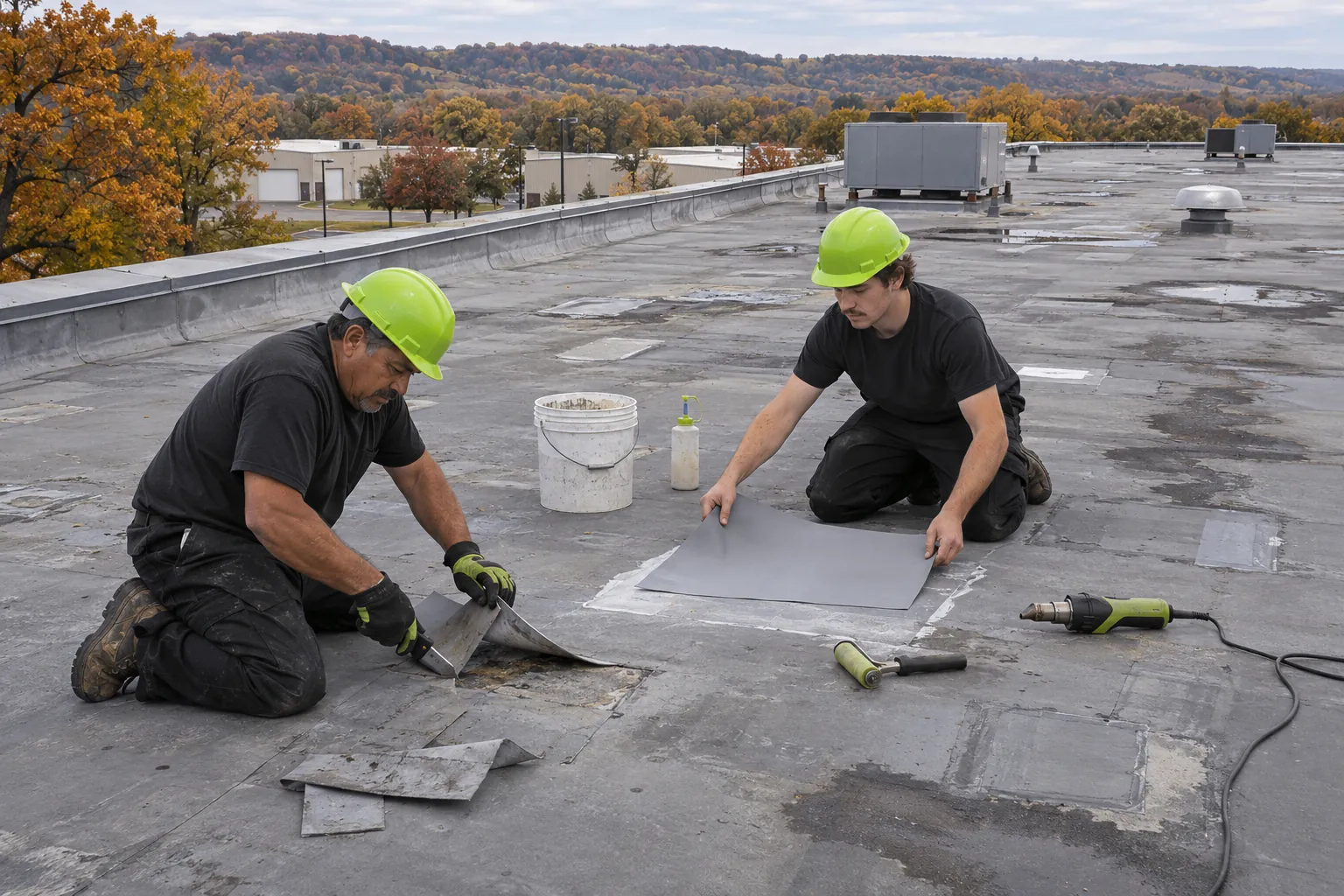
We repair the roof the building already has. That means TPO welded to TPO, EPDM with primed tape, built-up roofs with new plies, and metal panels matched by profile and gauge.
- Roof walk and photos before any price
- Repairs listed by location on the roof
- Temporary seals when water is coming in now
- Permit checks with Bellevue Permits and Inspections
Want a Second Look at a Repair Quote?
Send the address and the scope you were given. We walk the roof and tell you which items we agree with and which ones we would handle differently.
What Our Inspection Checks
Every roof walk covers the same list, so nothing between the drain and the ridge gets skipped.
- Drains, strainers, and clamping rings
- Seams and laps across the field
- Curb flashing at rooftop units
- Parapet coping and counterflashing
- Panel screws, washers, and side laps
- Edge metal, gutters, and scuppers
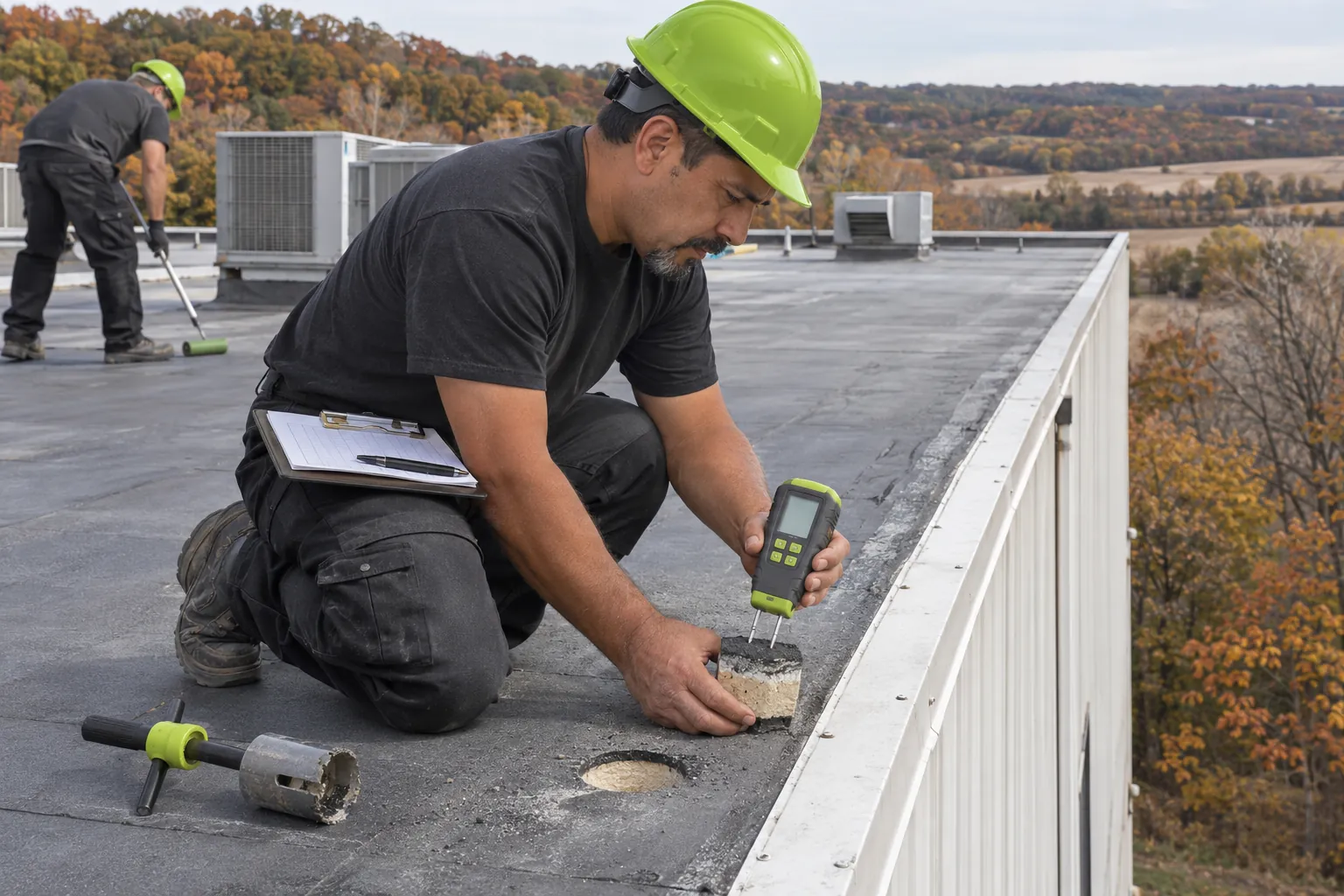
- Moisture in the insulation, by meter or core cut
What We Will Not Do
These habits cause repeat leaks, so we leave them out of every job.
| We Avoid | What We Do Instead |
|---|---|
| Pricing a repair from photos alone | Walk the roof and test the area first |
| Sealing over a wet section | Cut out wet insulation and rebuild the spot |
| Mixing incompatible materials | Use materials made for your membrane or panel |
| Calling for full replacement by default | Price the repair first when the roof allows it |
| Leaving mastic as the final fix | Treat mastic as temporary and return for the repair |
Talk to Us About Our Bellevue Commercial Roof Repair Work
Call or send the address. We set a roof walk and explain what we find in plain terms.