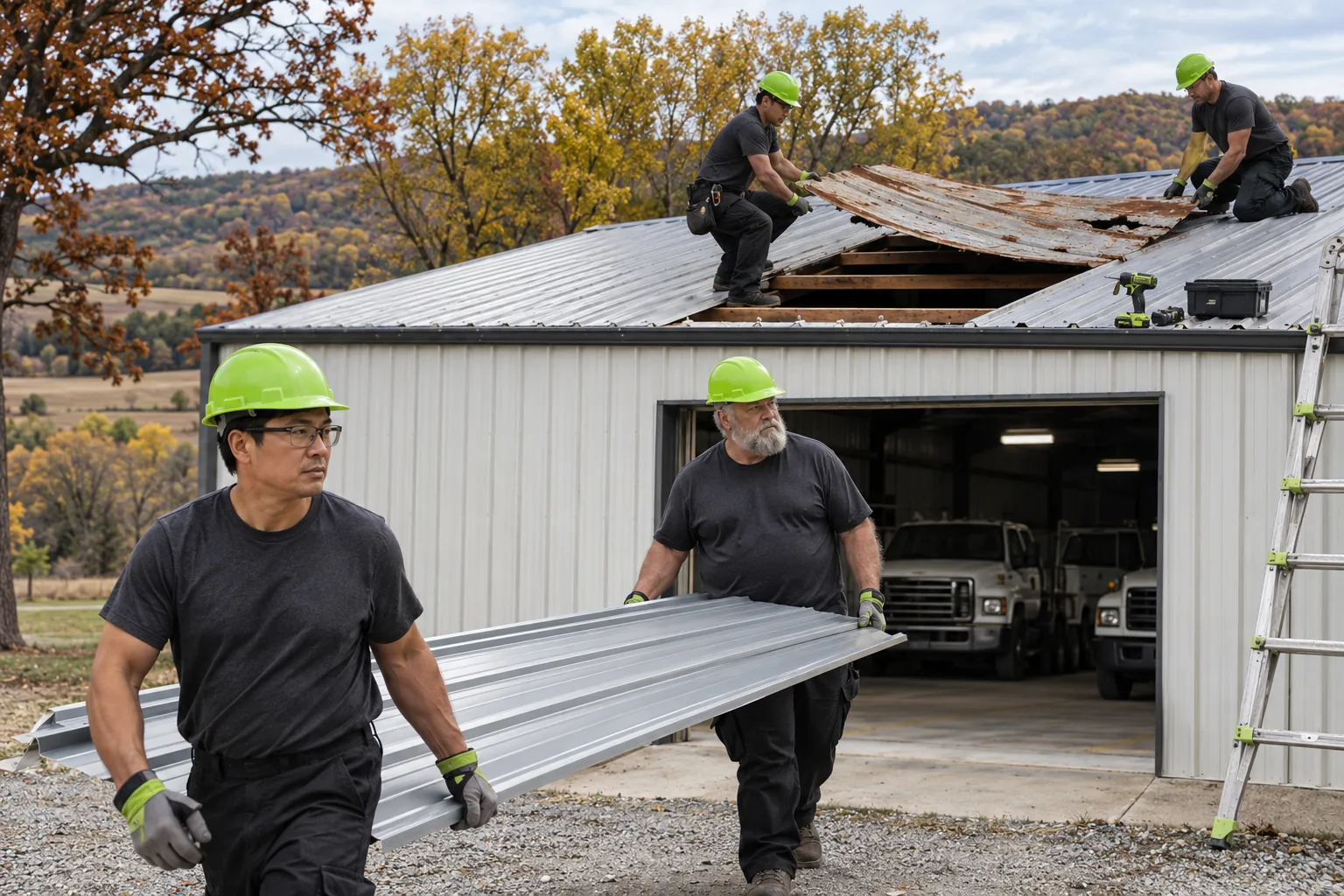
Commercial Metal Roof Repair
Attached metal warehouses and canopies with leaking screw rows, open side laps, or rusted panels at the eaves.
See commercial metal roof repair
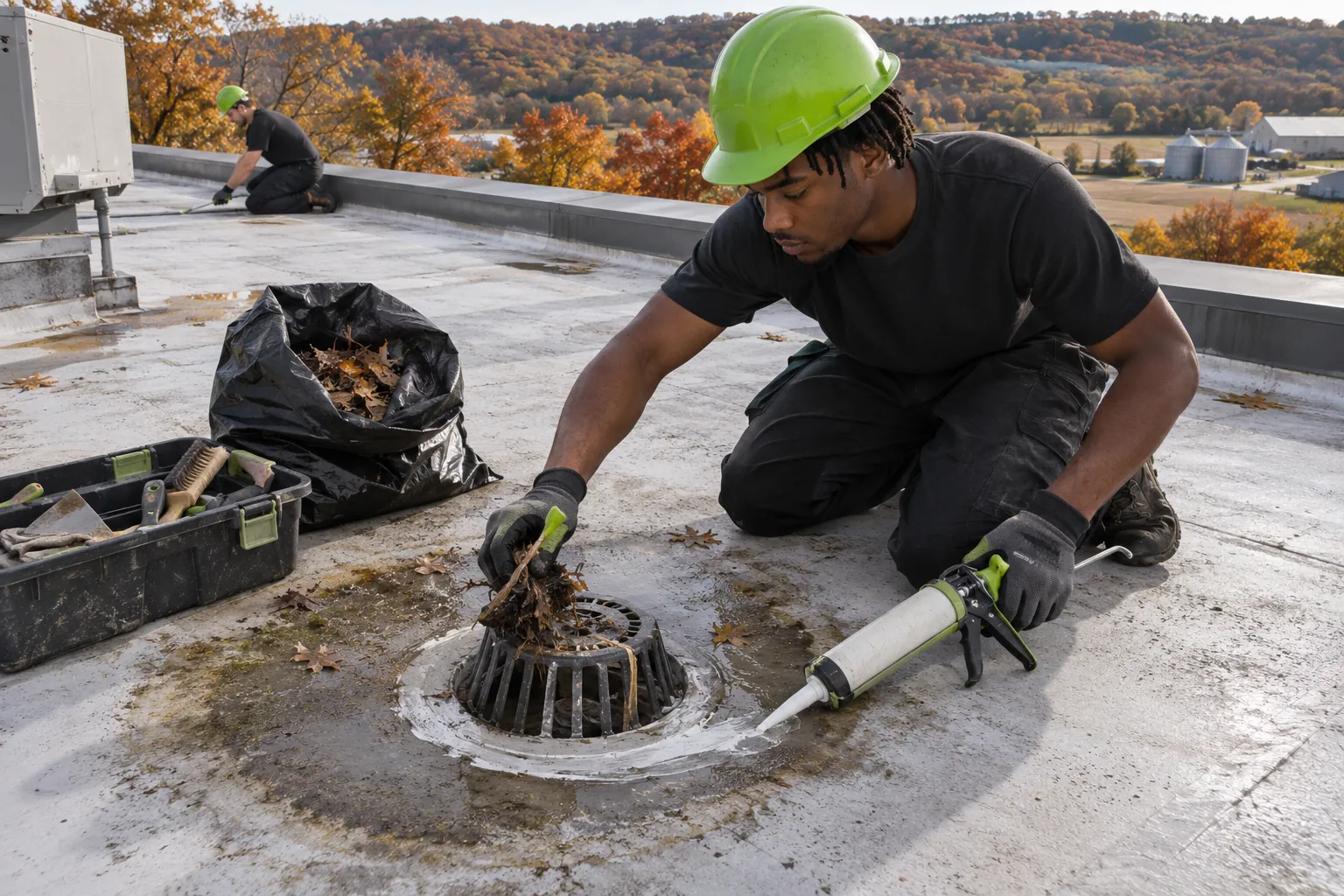
As a Bellevue flat roof repair contractor, we fix split seams, ponding at drains, and blisters on TPO, EPDM, and built-up roofs, section by section.
Bellevue flat roof repair works best when the problems sit in a few places. This table shows what we look for before recommending a patch.
| Factor | Repair Fits | Plan For Replacement |
|---|---|---|
| Insulation | Dry beyond the leak area | Wet across most of the field |
| Membrane | Flexes and folds without cracking | Cracks or shrinks from the edges |
| Seams | A few open laps | Laps opening all over the roof |
| Drainage | Ponding that clears after rain | Ponds that never dry out |
| Past repairs | A few patches, still bonded | Patch over patch across the roof |
What shows up inside usually traces back to one of three spots on a flat roof.
Rings around the drain line on the ceiling point to the bowl, the clamping ring, or torn membrane at the drain.
The ring that holds membrane to the drain bowl works loose over time. We reset it, patch any tear, and replace a missing strainer.
A roof that stays dry in light rain but drips in storms has an opening above normal water level.
Wind-driven rain reaches coping joints, counterflashing, and wall flashing. We reseal those joints and clear overflow scuppers so water drops away from the laps.
Tiles that bow or crumble mean water has been soaking through for a while, usually from a slow seam leak spread across the deck.
Weak original welds and membrane shrinkage pull laps apart. We probe each seam, clean the split, and reweld it or cover it with a new TPO patch.
Each repair targets one part of the roof and uses materials that bond to the membrane already there.
TPO gets heat-welded patches, EPDM gets primed seam tape and cover strips, and modified roofs get torch or cold-applied plies over cleaned laps.
Clearing the line, resetting the clamping ring, and patching torn membrane at the bowl. Drains set too high get lowered so water reaches them.
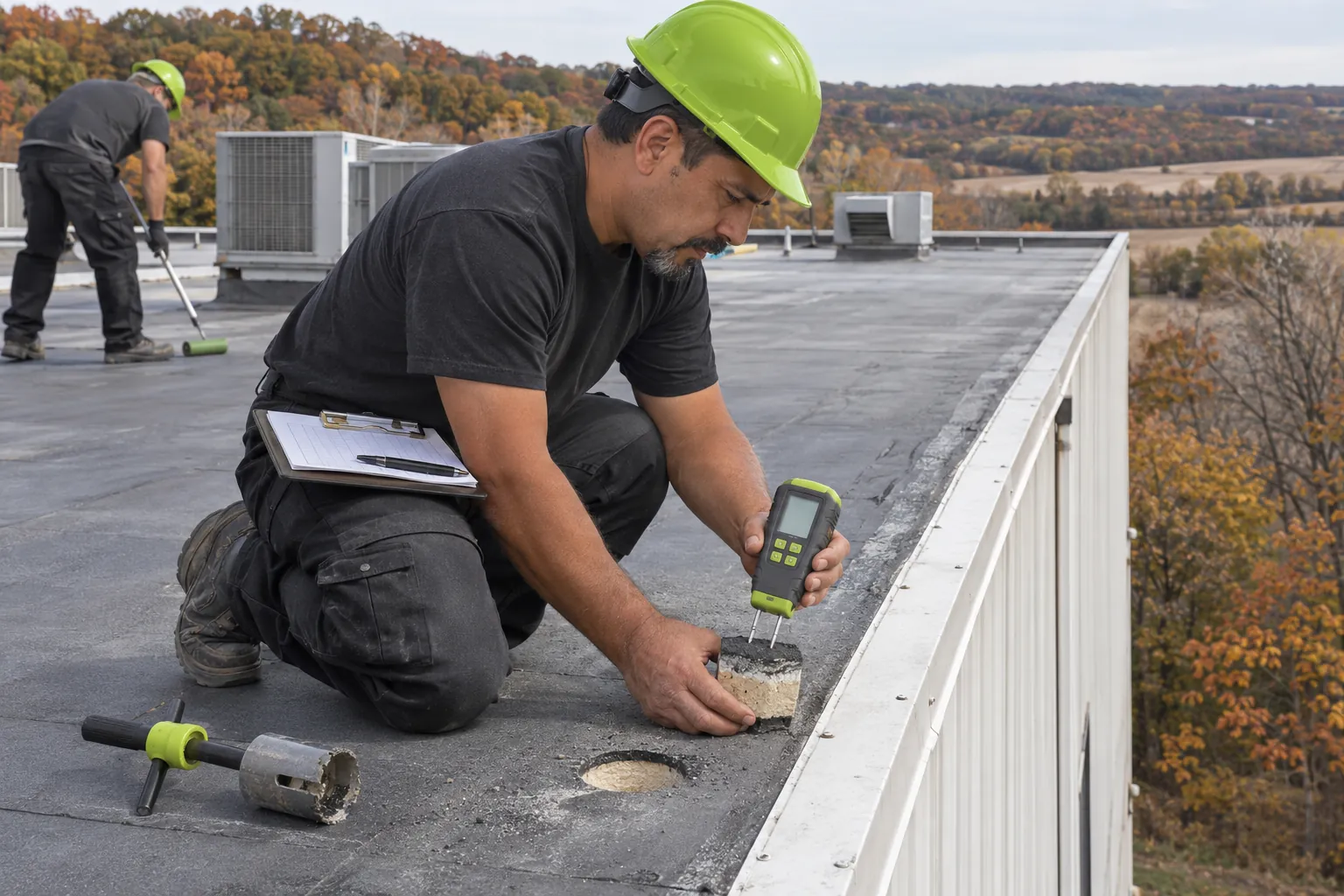
Saturated board under a leak gets cut out to dry deck, replaced with matching insulation, and closed with new membrane tied into the field.
Tapered insulation or crickets near low spots steer water toward drains, which keeps standing water off seams that would otherwise stay soaked.
Flat roofs cover most of the low-slope buildings we repair around Bellevue.
A cleared, properly seated drain empties the roof after storms, so water stops sitting against seams.
Rewelded or taped laps stop the slow leaks that soak insulation long before a stain appears.
Cutting out only the wet board saves the dry roof around it.
Repairs happen from the roof, so classrooms, offices, and loading areas keep running below.
Ponding that sits for days pulls on seams and adds weight. Ask for an estimate and mention which drains hold water after rain.
Four decisions, in order, on every flat roof we repair.
Each seam gets probed, each drain gets opened, and an infrared scan or core cut checks the insulation around the leak.
Few wet spots and a flexible membrane mean patching. Brittle sheets or saturation across the field mean pricing a section replacement instead.
TPO, EPDM, PVC, modified, and built-up roofs each need their own primers and patches, so the material list follows the roof you have.
Kettles, torches, and welders stay away from air intakes, and rooftop units keep running while the repair goes on around their curbs.
Many flat-roof buildings also have a metal section or rooftop equipment that needs work.
Attached metal warehouses and canopies with leaking screw rows, open side laps, or rusted panels at the eaves.
See commercial metal roof repair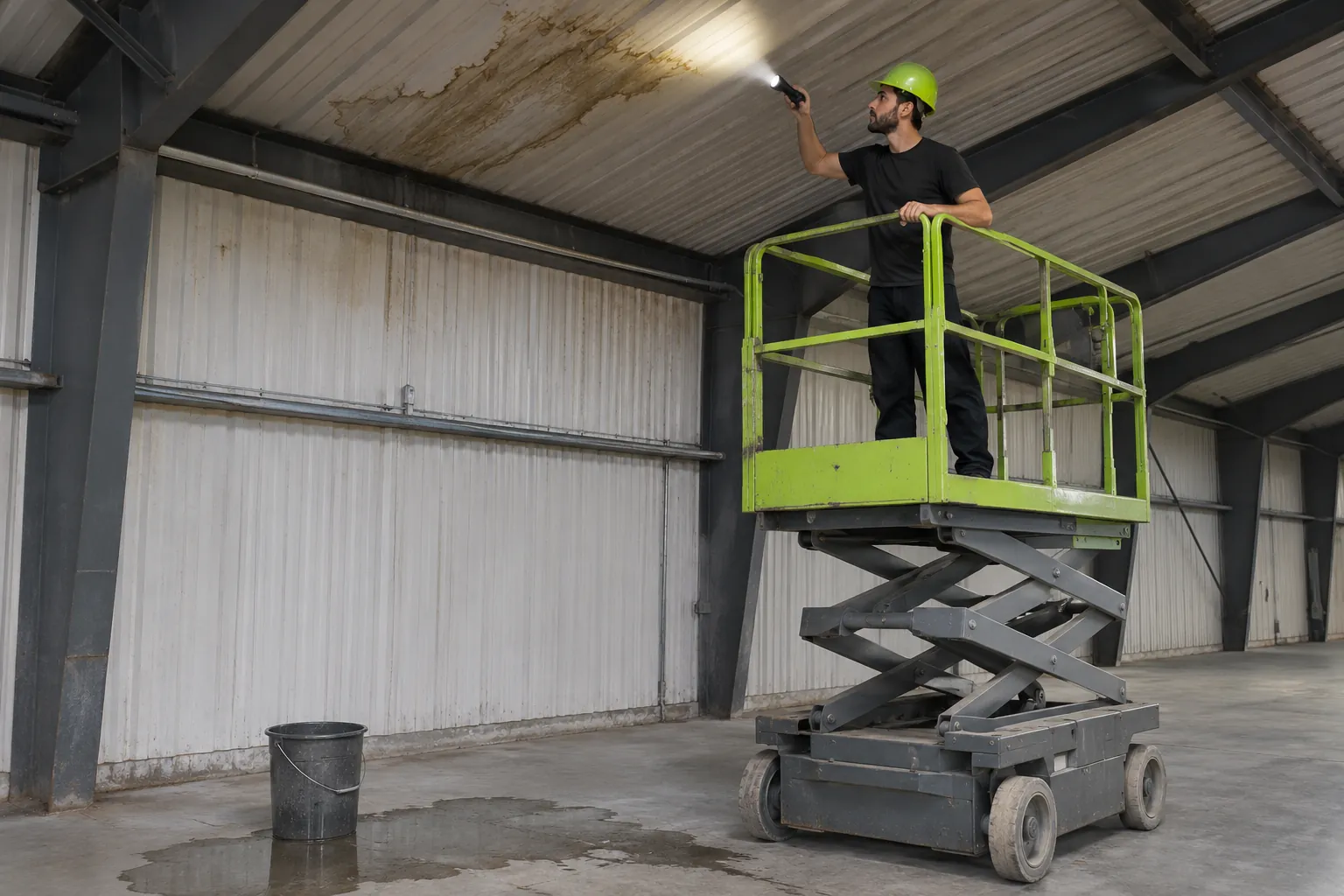
A stain with no obvious source gets traced from the ceiling up before any repair is priced.
See commercial roof leak repair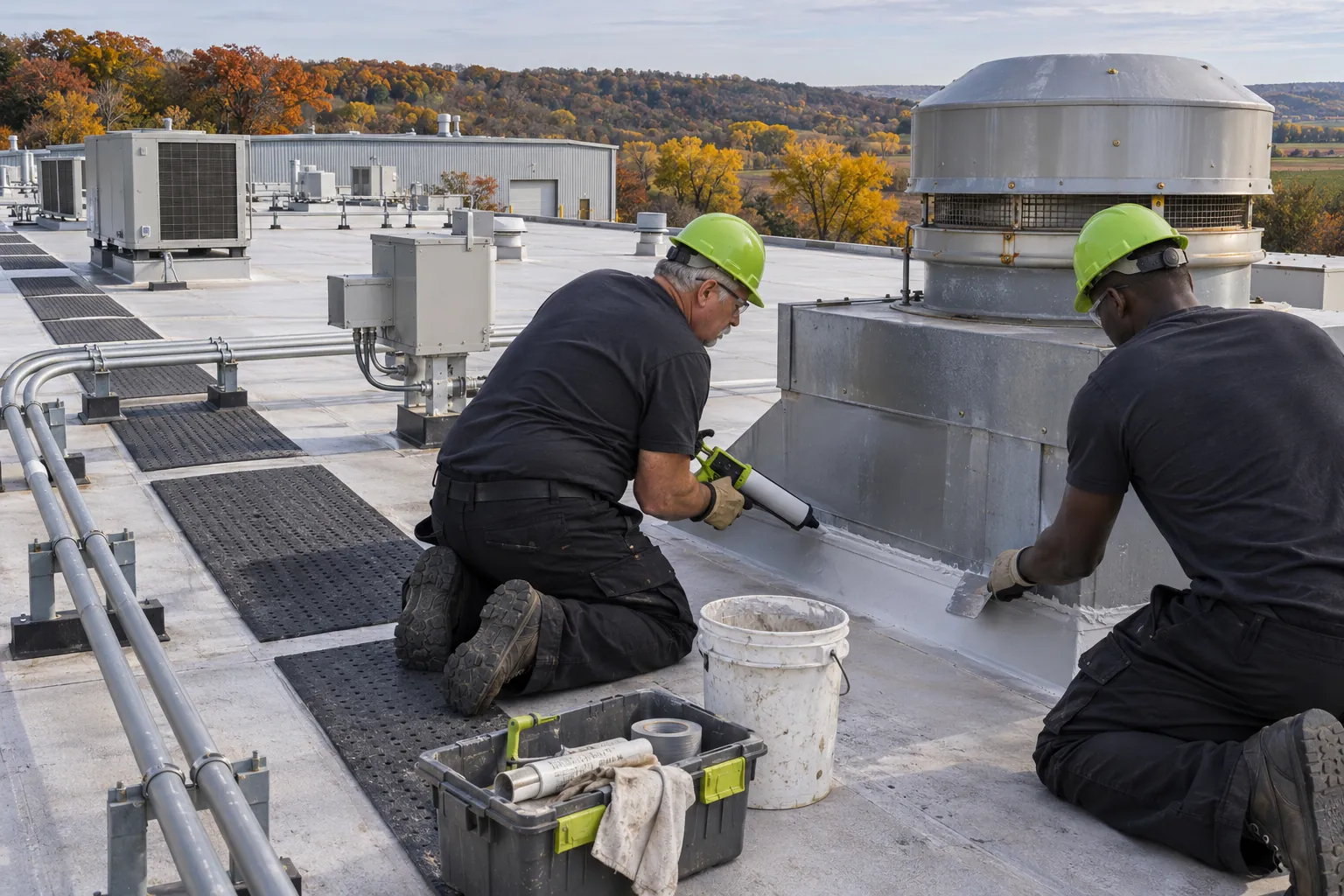
Plant roofs with exhaust fans and process stacks get materials that hold up to heat and residue.
See industrial roof repairShort answers on top, detail underneath.
Patching fits when leaks trace to a few seams or flashings and the membrane still bends without cracking. Replacement fits brittle or shrinking membrane, roofs covered in patches, or large areas of wet insulation. A moisture survey shows how much of the roof is dry.
Standing water around the drain after rain, a missing or broken strainer, or stains on the ceiling below are the signs. The fix can be clearing the line, resetting the clamping ring, patching torn membrane at the bowl, or lowering a drain that sits too high.
Downpours push water higher than light rain does. Wind-driven rain reaches coping joints, counterflashing, and wall flashing, and blocked overflow scuppers let water rise to seams that stay dry most days. We test those high spots first.
Cold-weather materials allow many winter repairs once the work area is clear of snow and ice and dry to the touch. Adhesives, primers, and sealants each have a minimum application temperature, so some permanent repairs wait for a warmer stretch while a temporary seal holds.
Most splits start at a weak original heat weld or membrane that shrinks and pulls at the lap. Foot traffic flexing the seam, dirt, and age add stress. Each seam gets probed, and splits are cleaned and rewelded or covered with a new TPO patch.
Membrane type and how much material comes off set most of the price. TPO and EPDM need matching membrane and primers, and built-up roofs need added plies. Replacing wet insulation adds the most, and drain work or tapered fill for ponding adds to the scope.
Tell us which drains hold water or where the stain sits. We walk the roof and price the repair section by section.